
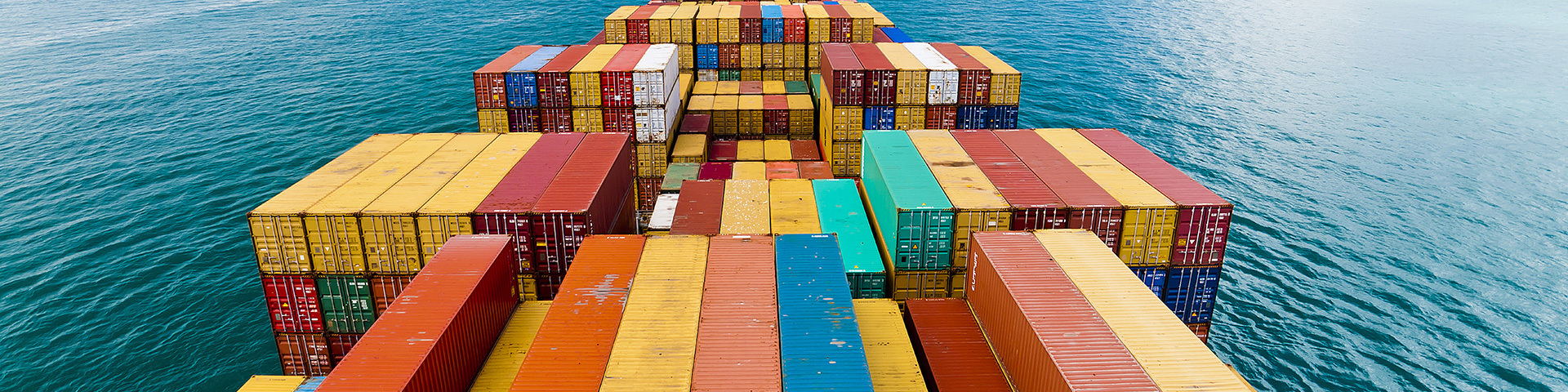
Need Ocean Shipping Support? Expand Your Global Reach with the Expert Sea Freight Forwarders
Enjoy flexible, cost-effective sea freight solutions, ocean shipping options
Ocean freight demand is expected to rise for the next several years—alongside increasingly formidable geopolitical factors. In the face of these challenges, including tricky customs and confusing tariffs, many organizations across a broad range of industries choose to partner with experienced customs brokers and sea freight forwarders like AIT.
Why? Because we'll expertly handle the complexities of moving your freight around the world, so you can focus on what matters: growing your bottom line.
Choose AIT's global sea freight team for ocean shipping
Whether you're shipping thousands of TEUs or the occasional less than container load, when you partner with us, you'll enjoy access to:
- More than 1,500 weekly direct services serving 100+ countries via the world's largest consolidation network
- Real-time, global purchase order management dashboard
- Oversized, overweight, project and breakbulk cargo expertise
- Strong relationships with core and niche carriers
- End-to-end shipping visibility
- 24/7 customer support
- Sustainable marine fuel (SMF) options for reduced greenhouse gas emissions
- And much more!
At AIT, we're much more than sea freight forwarders. Around the world, we offer a comprehensive range of services across nearly every mode, including barge, ground, rail, and air.
And our global logistics experts are ready to develop a sea shipping program with you that includes:
- Purchase order management
- Landed costing
- Packaging solutions
- Permit management
- And more!
- Simplified, per-kilogram pricing
- All-inclusive service across the U.S.
- All origins common rated
- Dedicated ocean team
- Complete shipment visibility
- Save as much as 75% compared to traditional air freight
- Speeds up to 30% faster than traditional inland point intermodal service from Los Angeles
For FCL shipments, all goods in a container are owned by one party, while LCL involves multiple shippers' goods packed together.
Business needs and inventory requirements determine a company's shipping decision, along with factors like cost and commodity type. For instance, LCL allows you to maintain a smaller, more adaptable product inventory, while FCL is ideal for bulk items and large-volume products.
Download our ocean freight shipping guide as a quick reference for conversions, dimensions, and helpful links.
- Remote location filing
- 10+2 Importer Security
- Automated broker interface offering real-time status tracking
- Bonded warehouse locations
- Temporary importation under bond
- Carnet issuances, validations, and cancellations
- Risk management with Incoterms
- Compliance support