When to Opt for Sea Freight
International shipping tips and tricks
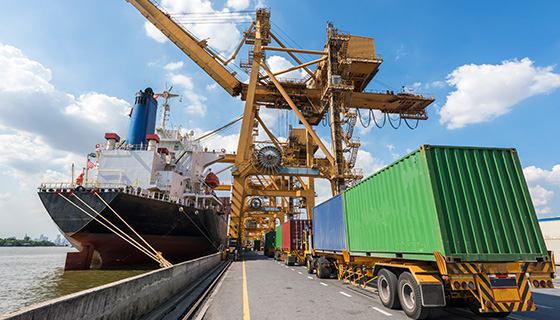
Sea freight is often the practical choice for moving large or heavy shipments across borders. It generally costs less per unit than air freight, but transit takes longer and schedules require more planning. Making the right decision involves considerations including cargo size, delivery requirements, inventory needs, budget and logistics at both ends of the route.
When sea freight is the better fit
Sea freight is a good choice when:
- The shipment is large, heavy or difficult to move economically by air.
- The delivery window allows for ocean transit and possible port or customs delays.
- Lower transportation cost matters more than the fastest possible arrival.
- Demand is predictable enough to plan around sailing schedules.
- The cargo can be packed and secured for containerized transport.
Sea freight vs. air freight
For a broader comparison of international sea and air shipping, see the How to Find the Right Air and Ocean Shipping Partner guide.
Choose the right container option
Full container load (FCL) dedicates a container to one shipper's cargo. It is often a good fit when the shipment fills most of a container, needs tighter control over handling or can benefit from a direct container move.
Less than container load (LCL) combines cargo from multiple shippers in one container. It can make sense when a shipment does not require a full container, although consolidation and deconsolidation add handling steps and may affect transit time.
Cargo that is oversized, unusually shaped, temperature-sensitive or difficult to load may require specialized equipment or project planning. Confirm dimensions, weight, packaging, lifting points and temperature requirements before selecting a service.
Plan for documents, customs and cargo details
Sea freight planning involves more than reserving vessel space. Depending on the commodity, origin, destination and terms of sale, the shipment may require a commercial invoice and packing list to describe the transaction and cargo; a bill of lading as the transport document; verified gross mass (VGM) for a packed container; and a certificate of origin, permits or other product-specific documents.
Accurate descriptions, Harmonized System codes, weights, dimensions, shipper and consignee details, and Incoterms help reduce customs questions and avoid preventable delays.
Build a decision around total cost and timing
Compare the complete shipment plan, not just the rate. Include origin pickup, terminal handling, documentation, customs, duties and taxes, destination delivery, storage and any special equipment. Then compare the expected arrival date with the date the goods are needed for production, distribution or sale.
If the full shipment is not urgent but a small portion is, a mixed-mode plan may be practical: move most of the volume by sea and use air for time-critical replenishment. This approach can protect service levels without placing every unit on the fastest and most expensive mode.
How AIT can support your sea freight plan
Once these factors are clear, a freight forwarder can help turn the plan into a workable routing and documentation process. AIT Worldwide Logistics provides sea freight options for FCL and LCL shipments, along with consolidation, project and breakbulk cargo, containerization and exclusive charters. Services also include end-to-end shipment visibility and customs clearance.
Explore AIT's sea freight services
Terms to know
FCL: Full-container-load: one shipper's goods occupy a container, whether the container is full or not.
LCL: Less-than-container-load: cargo from multiple shippers shares one container.
Ro-Ro: Roll-on/roll-off: wheeled cargo, such as vehicles or equipment, is driven or rolled directly on and off the vessel.
VGM: Verified gross mass: the total weight of a packed container, which must be provided before loading.
Dry bulk shipping: Unpackaged commodities, such as grain, minerals or sand, loaded directly into a vessel's holds.
Packing list: A detailed description of the goods that are shipped, with exact quantities, possible product or model numbers that help identify the goods, along with the shipper’s and the consignee’s name and address.
Commercial invoice: Similar to a packing list; however, this document also includes the pricing of the goods. This is mainly stated for the goods in case duties or taxes are due when the shipment arrives at the destination. Customs calculations rely on the amounts from the commercial invoice.
Bill of lading: An official shipping document issued by the carrier and forwarded to the consignee so that the goods can be claimed after customs clearance.
Certificate of origin: States the origin of goods. Often issued by a local chamber of commerce.
Certificate of analysis: Generally required for food products as to verify safety for human consumption. Demonstrates that tests have been performed on a product sample (for salmonella, for example), and the tests came back negative.
Container sizes
Common dry sea freight containers are 20 or 40 feet long, about 8 feet wide and 8.5 feet high. A 40-foot high-cube container is about 9.5 feet high and provides additional interior clearance. Actual payload depends on container design, cargo density, packaging and applicable road or port limits.
Types of vessels
- Panamax: Sized to pass through the original Panama Canal locks; typically, up to about 5,000 TEUs.
- Post-Panamax: Larger than the original locks allowed; generally, about 5,000 to 10,000 TEUs.
- Neo-Panamax: Designed for the expanded Panama Canal locks; commonly about 10,000 to 14,000 TEUs.
- Megaship: A broad term for very large container vessels, which can exceed 18,000 TEUs.
Explore the latest from AIT’s logistics library
-
What is in-air customs clearance?
Learn how in-air customs clearance uses pre-arrival processing to help reduce air freight delays, support faster cargo availability and improve delivery planning.Read more -
How to build a more resilient supply chain before disruption hits
Learn how to identify risk earlier, make informed decisions faster, and maintain essential operations when conditions change.Read more -
What is IATA CEIV Pharma certification?
Learn what IATA CEIV Pharma certification means, why it matters for pharmaceutical logistics and how certified freight forwarders can help protect product integrity across the pharma supply chain.Read more